Review: The 2026 Chevy Trax
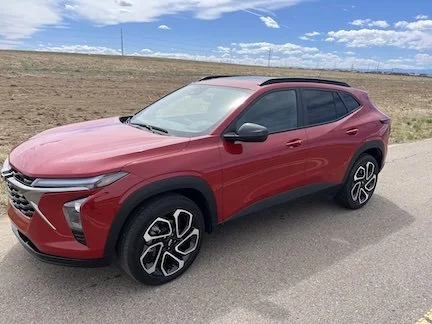
The 2026 Chevrolet Trax doesn’t pretend to be something it isn’t. That’s why I liked it so much.
After spending five days behind the wheel, what stood out wasn’t any particular “wow” feature. It was more about how this small crossover leans into affordability and practicality while delivering a satisfying ride and experience.
Look, in a world where even modest SUVs can creep into the $40,000–$50,000 range, the Trax makes a clear argument: not everyone needs—or wants—to spend that kind of money.
That positioning shapes everything about the Trax. It’s not about luxury, eye-popping performance, or cutting-edge innovation. It’s about getting people into a new vehicle with modern styling, solid utility, and a manageable price tag. For younger buyers or first-time SUV owners, I think that matters more than tossing in a panoramic roof or massaging seats. Agreed?
Attractive and Fuctional
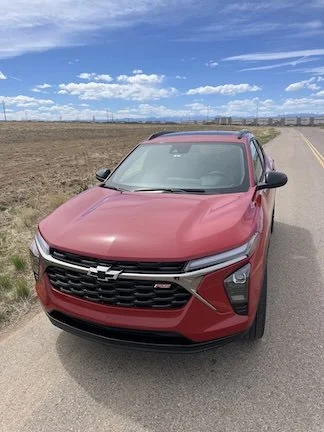
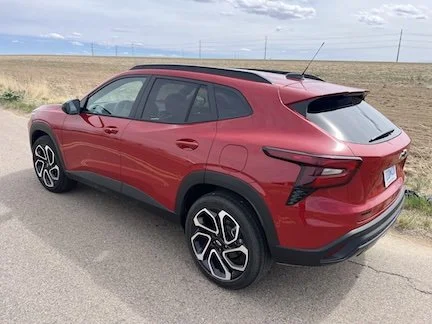
Outside, I have to say this crossover is quite handsome. It’s easy for vehicles in this category to all look alike. The Trax cuts a nice line, sleek and sporty. I was impressed at first glance.
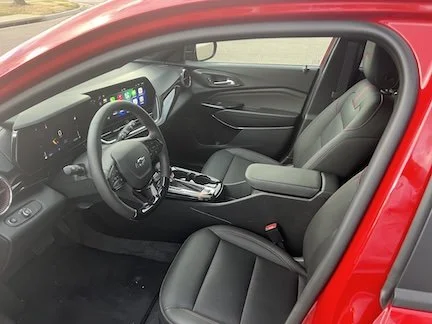
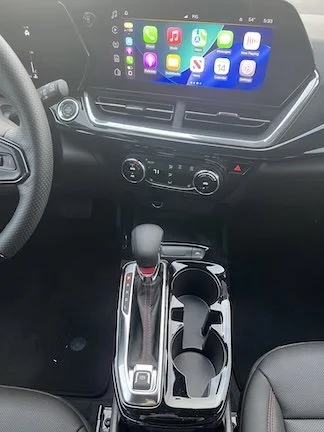
Inside, the Trax feels modern, too. The large touchscreen is one highlight. I drove the 2RS trim level, where you get an 11-inch screen. Some of the lower trims start you off with an eight-inch display, and even that looks good. Plus, it’s intuitive to navigate through the screen’s options.
The digital instrument cluster also adds a contemporary feel that elevates the cabin beyond “bare bones.”
But the experience isn’t flawless.
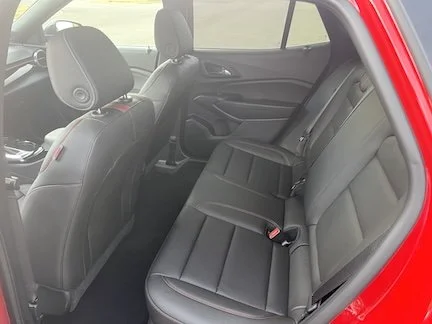
Finding a comfortable seating position can be a bit of a chore. That’s one of those things that varies from driver to driver, but when it becomes noticeable over multiple days, it’s worth mentioning. The adjustments just never seemed to land quite right for me, and that can affect long-drive comfort.
How Do You Turn It Up?
My funniest moments were trying to find the volume controls, which are typically found on a steering wheel, right? I eventually pulled over and wondered if I was crazy. There’s so many choices on that wheel—they couldn’t have left off the volume controls, could they?
Ha, no, they didn’t. I finally found them tucked away on the backside of the steering wheel. I’ll throw that into the “non-intuitive” category. But honestly, once you know where they are, it’s fine. In fact, maybe bonus points for not cluttering up the front real estate.
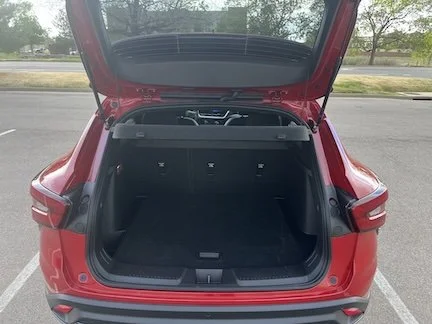
Storage is adequate—not exceptional, not disappointing. It does the job for daily use. Rear storage is in line with expectations for a compact crossover: useful enough for groceries, gear, or a weekend trip, but not cavernous.
On paper, I’d say the tech offerings are a strength of the Trax. Features like Apple CarPlay and Android Auto—wireless, even—bring a lot of functionality into an otherwise budget-conscious vehicle.
In practice, though, I did experience a hiccup. Connection reliability wasn’t perfect. Roughly 20% of the time, CarPlay refused to connect when starting the vehicle. That’s not catastrophic, nor a deal-breaker, and may have even been a bug on my end. Who know? It’s just not something you want to deal with regularly.
When it does work, it’s great. The interface is clean, the screen size helps, and it integrates smoothly with everyday driving needs. But inconsistency takes some of the shine off what should be a major selling point.
What’s the Rush?
Now, let me be blunt: the Trax is not built for thrill-seekers.
Acceleration is modest—“get up and go” exists, but it doesn’t exactly leap forward on demand. That said, this isn’t a flaw so much as a reflection of the vehicle’s mission. In this price range, performance is often one of the trade-offs.
For city driving, commuting, and your run-of-the-mill errands, it’s perfectly acceptable. Highway merging requires a bit more patience, but it’s manageable.
It’s worth pointing out that you get front-wheel drive only; all-wheel drive is not offered in any of the trim levels. I know some people in snowy areas insist on this feature, but I also feel like the “need” for AWD is often overstated. Only you can decide if that’s a make-or-break proposition.
When it comes to overall performance, if you go in expecting excitement, you’ll be disappointed. If you go in expecting competence, you’ll be more than satisfied.
Not Overwhelming . . . On Purpose
The Trax also doesn’t overwhelm you with features—and that’s intentional.
There aren’t a lot of bells and whistles here. But again, let’s remember the broader philosophy: keep costs down, deliver the essentials, and make the vehicle accessible.
And that’s where the Trax really shines: its value.
This is one of the most affordable new vehicles on the market. But importantly, it doesn’t feel cheap. There’s a difference. The design is modern enough; the tech is mostly there, and the overall experience doesn’t come across as stripped-down to the point of frustration.
For cost-conscious buyers—especially younger drivers or families just starting out—that equation is compelling. You’re getting a new, stylish crossover without stretching your budget into uncomfortable territory.
The Bottom Line
The 2026 Chevrolet Trax will never win awards for luxury, performance, or innovation. It’s trying to solve a simpler problem: how to deliver a modern crossover experience at a price people can realistically afford.
It’s refreshing to find a vehicle that understands its audience. It’s practical, reasonably comfortable, and financially accessible. It doesn’t oversell itself—and that honesty might be its biggest strength.
The Details
2026 Chevrolet Trax 2RS
1.2-liter turbocharged 3-cylinder engine
137 horsepower
6-speed automatic transmission
Front-wheel drive
Fuel economy: 28/32/30 combined
MSRP (for the 2RS trim): $25,300
As tested: $28,385
Reviewed by Dom Testa
Vehicle provided by manufacturer